Quick Summary
Barber school in California takes about six months full-time or up to nine months part-time to complete the state’s required 1,000 training hours. Enrollment only requires a 10th grade education or equivalent, students can work around a training schedule, and licensing now involves a single written exam instead of a practical test. Financial aid, job placement support, and flexible scheduling make the path more accessible than many people expect going in.
Anyone researching a career change into barbering runs into the same handful of questions early on, which is why we put together honest answers to the FAQs about barber school people ask us most. Some of these answers surprise people, especially around timeline and cost, and a few myths about the field turn out to be outdated once you look at how California licenses barbers today.
Below are eight of the most common questions, answered straight, without the vague filler that leaves readers with more questions than they started with.
How Long Does Barber School Take?
California requires 1,000 hours of training before a student can sit for the barber licensing exam. Full-time barber programs at 40 hours a week usually finish in about six months. Part-time schedules, during the day or at night, run closer to eight or nine months since students train fewer hours each week.
There’s no way to skip hours to finish faster, since the state ties eligibility for the exam directly to completed training time. Students who need to slow down or speed up their pace can often switch between full-time and part-time within the same school, since the hour total stays fixed regardless of how the weeks are spread out.
How Much Does Barber School Cost?
Tuition varies by school and by the length of the program, so it pays to ask for a full breakdown before enrolling anywhere. Beyond tuition, expect a student kit with clippers, shears, and other tools, plus state fees once training wraps up: a $75 application and examination fee and a $50 initial license fee paid directly to California’s Board of Barbering and Cosmetology.
Financial aid can cover a large part of these costs for students who qualify. It’s worth comparing a few schools side by side, since kit contents, class sizes, and included extras like a mock board exam can vary as much as the sticker price does.
Do I Need a High School Diploma to Enroll?
Not always. California only requires a 10th grade education or its equivalent to sit for the barber exam. Most schools ask incoming students for a high school diploma or GED, but if neither applies, the state allows an Ability To Benefit (ATB) test through a certified outside tester as another path into a program.
The ATB route does take extra coordination, since the test has to be scheduled and paid for separately from tuition, so it helps to ask a school’s admissions team about the process early.
Is the Licensing Exam Hard?
It depends on preparation, but the exam itself changed for the better in 2022. Senate Bill 803 removed the practical portion of California’s barber exam, so candidates now only take a written test covering safety, sanitation, and technical knowledge through PSI Services.
Most barber schools run students through a mock board exam before test day, which takes a lot of the guesswork out of what to expect. Students who skip studying or show up inconsistently to class tend to struggle more, since the exam draws directly from what’s covered in the hours already logged.
Can I Work While Attending Barber School?
Yes, plenty of students do. Part-time day and night schedules exist specifically for people balancing a job or family responsibilities with their training hours. It takes longer to finish, usually eight to nine months instead of six, but the trade-off works well for students who can’t step away from other income while they train.
The honest trade-off is fatigue, since working a job on top of training hours leaves less time to practice technique outside of class, so it helps to set realistic expectations going in.
What Is Taught in Barber School?
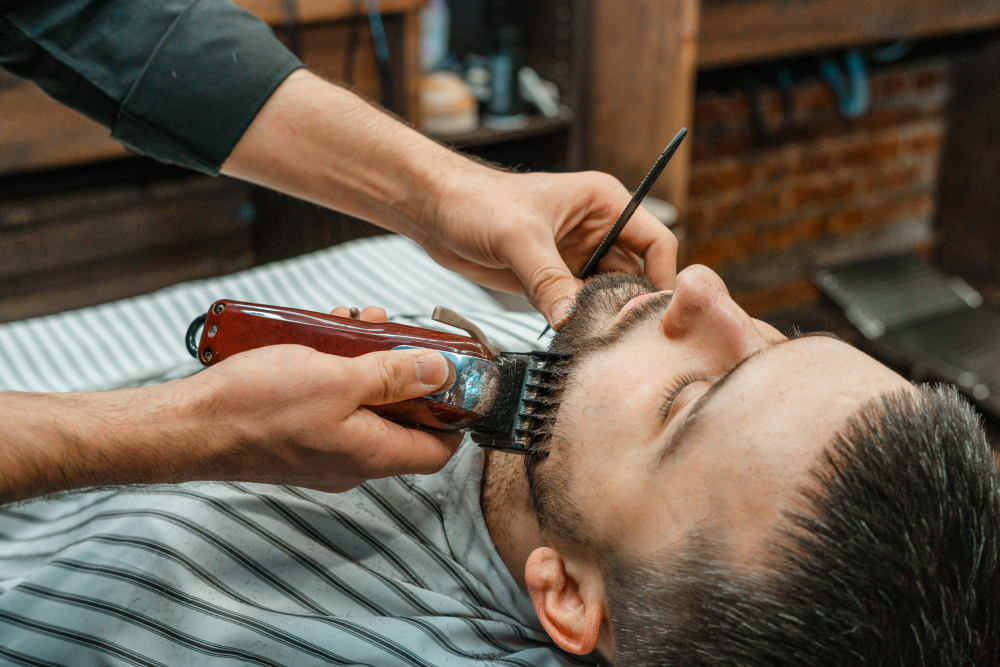
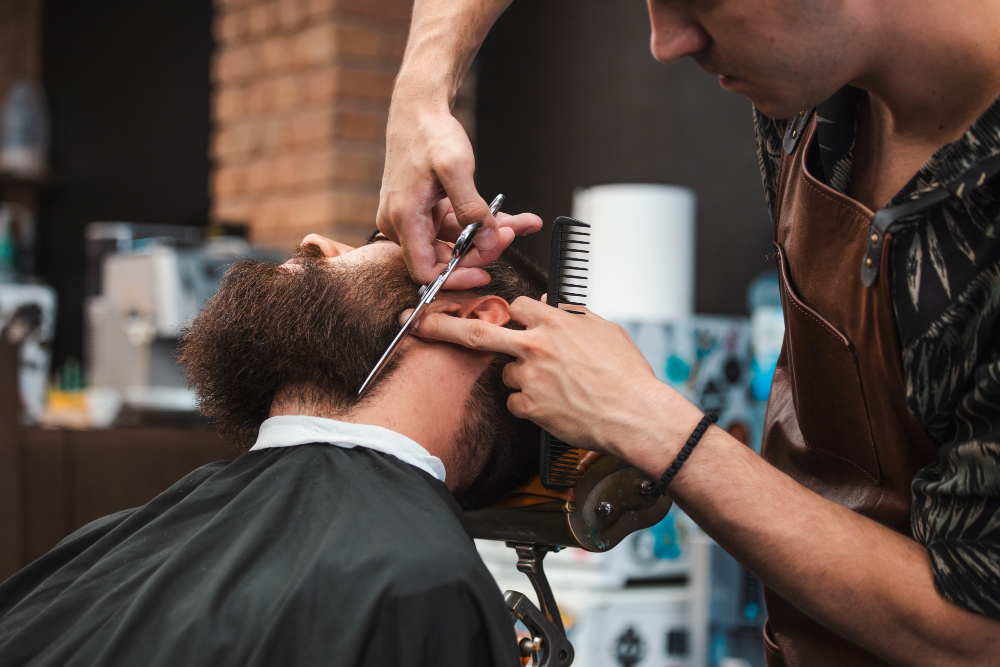
Barber programs go well past haircutting. Students also learn clipper work, shaving technique, skin care basics, and the health and safety rules covering sanitation and disinfection, since all of it shows up on the state exam. A good program also spends time on customer service and the business side of barbering, which plays just as large a role once a student starts working with real clients.
Programs also spend real time on sanitation because it’s one of the areas the state actively inspects, and skipping it in training would leave graduates unprepared for a working shop, not just the exam.
Will Barber School Help Me Find a Job After Graduation?
Most schools keep a referral list of local shops and salons looking for new talent, and guest artist events connect students to working professionals before they even graduate. That said, a school can open doors, but building a steady client list still comes down to an individual’s skill, consistency, and how they treat every person in the chair.
Students who show up early, take extra shifts in the student salon, and stay in touch with guest artists tend to line up work faster than students who wait passively for opportunities to appear.
Is Financial Aid Available for Barber School?
Yes. Students who qualify can access federal grants like the Pell Grant and FSEOG, along with Federal Direct Loans, and veterans or their dependents may qualify for GI Bill and other military education benefits.
Eligibility starts with a completed FAFSA and enrollment at a school approved to offer federal student aid. Award amounts vary from student to student based on financial need and enrollment status, so it’s worth filing early and asking a school’s financial aid office for a personalized breakdown before enrolling.
That covers the barber school FAQs we hear most often, though every student’s situation looks a little different once you factor in schedule, budget, and background.
Talk to Southern California College of Barber & Beauty
Southern California College of Barber & Beauty built its barber program around straight answers and real support, not empty promises. Students train the full 1,000 hours California requires on a schedule that fits real life, from full-time to part-time days or evenings after work.
Instructors bring decades of combined industry experience into the classroom, and every student works with a mock state board exam before the real one. Financial aid is available to those who qualify, and we proudly support veterans, active duty service members, and their families through several military benefit programs.
Reach out to Southern California College of Barber & Beauty today and get honest answers to whatever questions this list didn’t cover.