Quick Summary
A licensed California cosmetologist adds barbering through a 200-hour Board-approved crossover course and the state’s written barber exam. What changes is not the paperwork but the work itself: chemical services and long appointments give way to clipper work, fades and straight-razor shaving on a faster cycle. Decide this on the daily work you want, not on the hours involved.
Clients keep asking for a tighter fade or a beard cleanup, and you keep booking them with someone else. That is usually the moment a stylist starts looking at the cosmetology to barber crossover program, and it is a better reason than most. The route itself is short and well worn in California. The question worth more of your time is whether the job on the other side is the one you want.
This is the decision rather than the paperwork, which our transfer guide already sets out step by step.
Why Cosmetologists Move Into Barbering
The reasons we hear at the front desk are consistent, and almost none of them are about the license itself.
The first is demand you cannot meet. Barbering sits outside a cosmetology license in California, shaving above all, so a request you are not licensed for is revenue walking out of the chair. The second is rhythm. Barbering runs on shorter, more frequent appointments, and a lot of stylists prefer a day of twelve steady cuts to three long chemical services. The third is simply the room: barbershop culture, the chair-rental model, the repeat clientele who book every three weeks without being chased.
There is a fourth reason people rarely say out loud: a different client base. A barber column fills with men and boys who return on a short cycle and who book the same service every time, which is a steadier book than a column built on occasional color clients. Some stylists find that repetition comfortable and some find it dull, and knowing which you are is worth more than any salary figure.
Worth saying plainly, because people assume otherwise: most of our crossover students keep both licenses. This is usually an addition to what you already do, not a replacement for it.
What Actually Changes in Your Working Day
The hours and the requirements are easy enough to look up, but what a licensed barber’s day actually feels like is the part that decides whether this move suits you.
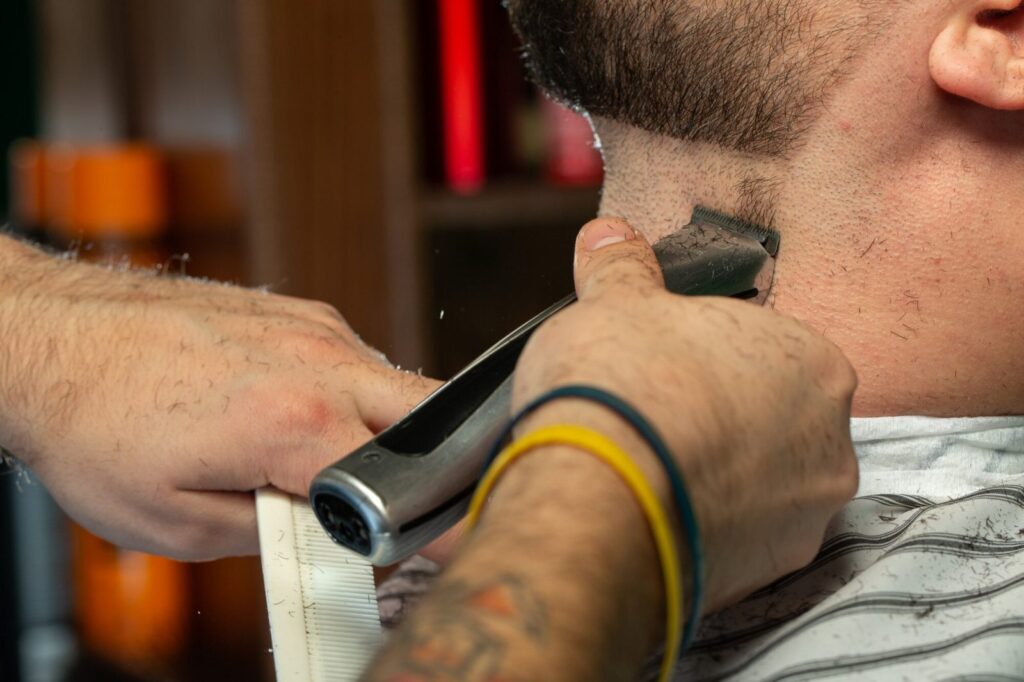
Your service mix shifts. Clipper cutting, fades, tapers, lineups and straight-razor work replace much of the color and chemical work that filled your column. The consultation changes with it. Instead of talking through a color plan over several visits, you are agreeing a shape and a length in two minutes and then delivering it.
The pace changes. Appointments get shorter and turnover rises, which means planning a day looks different and so does your pricing. Retail conversations largely give way to maintenance scheduling, because a fade grows out on a predictable clock and a client who books their next visit on the way out is the foundation of a barber’s week.
The physical demands change as well. More haircuts in a day means more time standing in one spot with your arms raised, and the repetition lands differently in your shoulders and wrists than a day of color work does. Barbers who last build that into how they set up a station and how they space a column.
Your kit changes too. Clippers, trimmers and a straight razor come with maintenance habits that are not optional, and blade care becomes part of your routine in a way that shears never demanded.
Where Your Cosmetology Training Already Carries Over
Plenty of it, which is exactly why California does not ask you to start again.
Infection control, disinfection and station sanitation transfer directly. So do anatomy, skin and scalp knowledge, chemistry and electricity, all of which you have already been examined on. Sectioning, elevation and the geometry of a haircut are the same geometry. And the hardest thing to teach anybody, reading a client and managing the conversation, you have been doing for years.
That is the reasoning behind the crossover route. The curriculum covers the barber practices that are not part of cosmetology training, which is why it runs to 200 hours rather than the 1,000 hours a California barber program requires from scratch.
What You Will Have To Learn Properly
Being honest about this matters more than selling you the course.
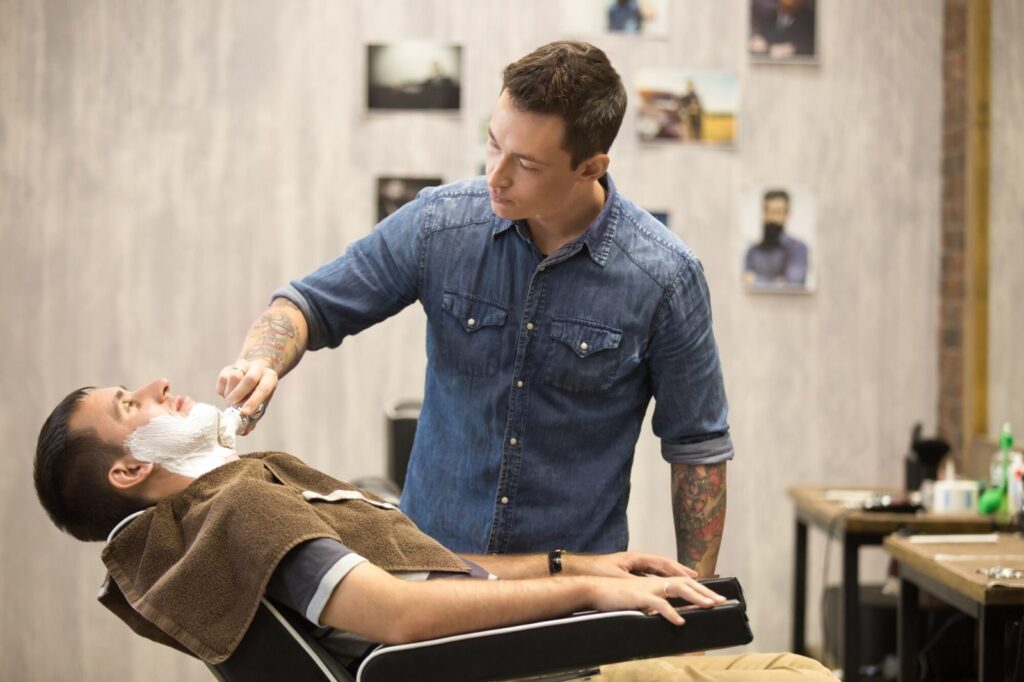
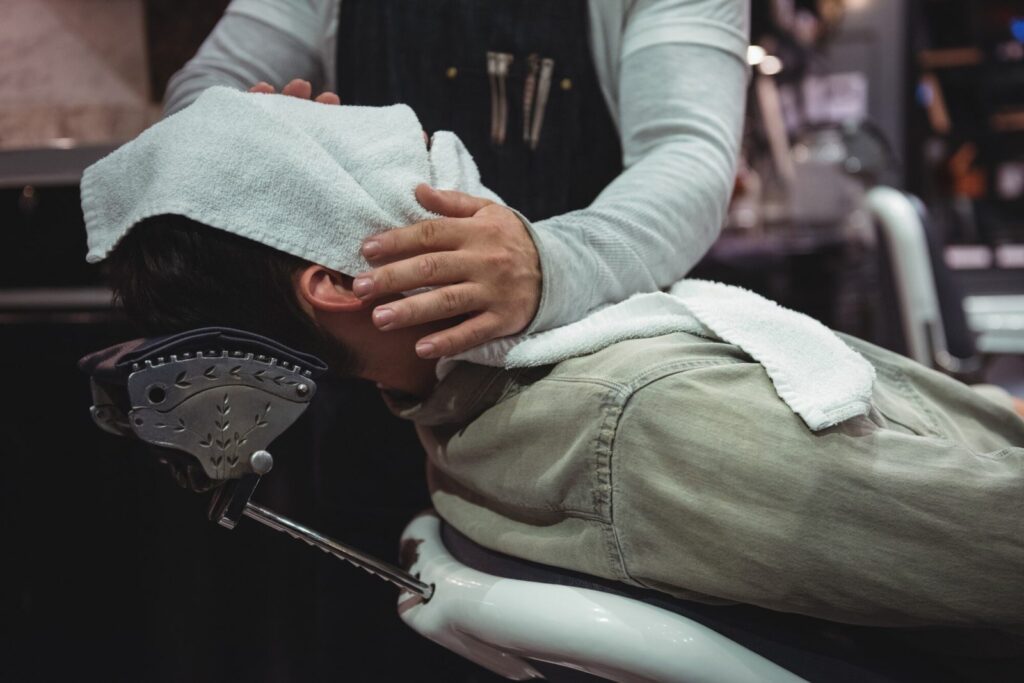
Straight-razor shaving is genuinely new for most cosmetologists, and it is the core of the crossover. Lather, hot towels, skin preparation, razor angle, working safely around the jaw and throat, and knowing which skin you do not put a razor near. It takes repetition on real faces.
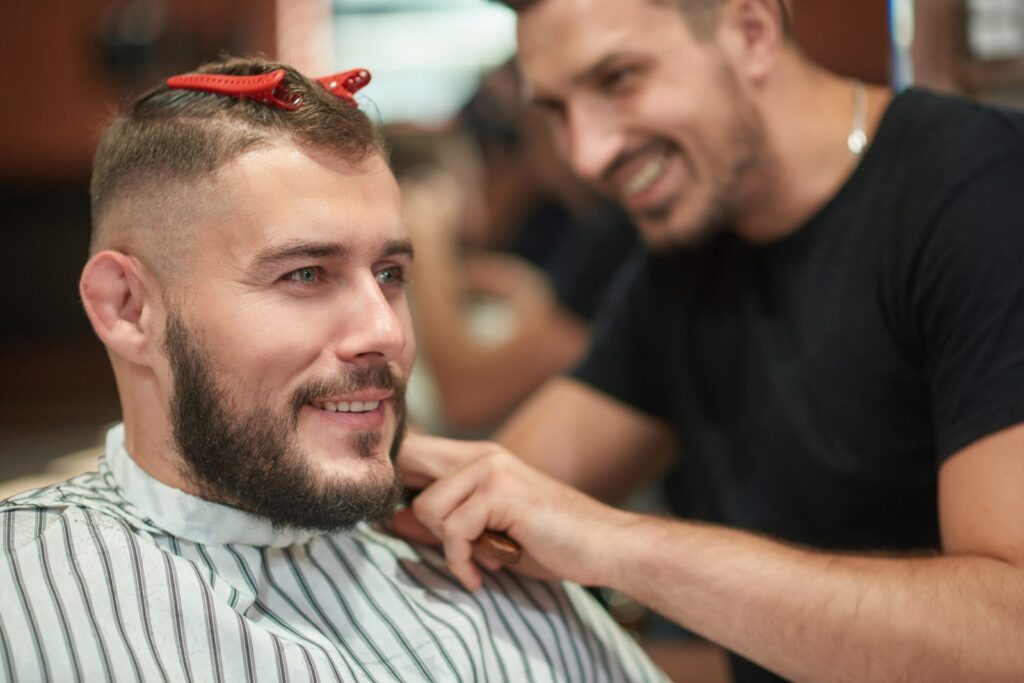
Consistent fading is the other one. You can cut hair, but blending a fade cleanly across different hair textures, over and over, at speed, is a specific motor skill. Beard and facial-hair design is its own discipline, shaping to a face rather than to a template. Men’s facial treatments round it out.
Starting something unfamiliar is the part people quietly worry about. Eduardo, who came to us without a background in the trade, described it in a 5-star review: “Coming in with no experience, I was a bit nervous, but they give you all the tools, guidance, and hands-on experience you need to succeed”. A licensed stylist arrives with far more than that.
What the Move Costs in Time and Money
Two hundred course hours have to come from somewhere, and for most people that somewhere is working time. Day, part-time and night schedules exist precisely because crossover students are usually already behind a chair, and financial aid is available to those who qualify.
Against that, count tuition, your kit and the exam application, plus the weeks when you are studying rather than earning. What the license buys you is scope: the legal room to offer barbering services and take the clients you are turning away. We will not put a number on what that is worth to you, because it depends entirely on your market and your column.
When you are comparing courses, the questions that separate them are practical ones. How many hours of the 200 are spent on shaving specifically, how often will you have a real client in your chair rather than a mannequin, and is exam preparation built into the course or sold as an extra. Ask those three and the answers will tell you most of what you need.
The business side is taught rather than left to you to work out, which matters when you are deciding between renting a chair and taking a job. Luke, a barber student, said of his instructor in a 5-star review: “The barber instructor Anthony is very helpful and knowledgeable about the business of cutting hair”.
A Short Checklist for Deciding
If you want this down to five questions, these are the five.
- Are clients already asking for work your license does not cover?
- Do you prefer short repeat appointments to long chemical services?
- Can you find 200 hours around your current schedule in the next year?
- Do you want to add barbering to cosmetology, or move across entirely?
- Does the thought of a straight razor in your hand appeal or alarm you?
Four answers pointing the same way is a strong signal. If you are still weighing the two trades against each other rather than adding one to the other, our comparison of barber vs. cosmetologist is the better place to start, and the full process for how to transfer from cosmetology school to barber school is set out step by step.
Training for Your Barber License in Escondido
Our crossover course runs 200 hours in person at 641 North Broadway, with students taking real clients in our licensed school-operated barbershop under instructor supervision. Shaving in particular cannot be learned at a distance, which is why none of it is online.
Our instructors bring a combined 40 years and more of barber and beauty industry experience, and exam preparation runs alongside the practical work, including a mock state board exam before you sit the real one. If you do not hold a cosmetology license yet, our barber school in Escondido is the 1,000-hour route instead.
Either way, the honest next step is to come and watch a crossover class for twenty minutes: schedule a tour and bring your questions.
Frequently Asked Questions
Can I be a barber with a cosmetology license?
Not on the cosmetology license alone, because California treats barbering and cosmetology as separate licenses and shaving sits outside a cosmetologist’s scope. The practical consequence is that you need the crossover course and the written barber exam before you can legally offer a straight-razor shave, however good you already are with clippers.
Is 26 too old to become a barber?
No, and California sets a minimum age for licensure rather than a maximum. Career changers are the norm in a crossover class rather than the exception, and arriving with a license and a few years of client experience shortens the learning curve instead of lengthening it.
Is barber or cosmetology harder?
Cosmetology covers more ground across its 1,000 hours, while barbering goes narrower and deeper, and coming from cosmetology the theory will feel familiar while the straight razor will not. They are difficult in different places, so the honest answer depends on which you have already done.
Ready to Start?
Come and see a crossover class at Southern California College of Barber & Beauty before you commit, and find out whether barbering is a launchpad for your future.
Southern California College of Barber & Beauty prepares students to sit for the California state board examination. Licensing requirements are set by the California Board of Barbering and Cosmetology.