Quick Summary
Cosmetology covers hair, skin, nails, and lash and brow services under a 1,000-hour California program, while esthetics focuses on skin care in a 600-hour program. Cosmetologists work mostly in salons on hair color, cutting, and styling, and estheticians build careers in spas and skin care studios around facials, exfoliation, and hair removal. Both licenses require training at a Board-approved school and a written state exam, so the better fit comes down to the work you want to do every day.
Cosmetology and esthetics both sit under the beauty umbrella, but they lead to different licenses, different training hours, and very different workdays. If you are weighing the two, your choice shapes your schedule, your costs, and the clients you see every week.
Each license covers different services, takes a different number of hours, and leads to a different daily routine.
What Is Cosmetology?
Cosmetology is the broader of the two licenses. California law defines it as a combination of services that includes cutting, coloring, perming, relaxing, and styling hair. It also covers cleansing and massaging the scalp, face, neck, arms, and upper body, and applying cosmetic products to the face. Hair removal, nail care, and lash and brow tinting or perming fall under it too. Laser and light wave hair removal are excluded.
The state requires 1,000 hours of training. The curriculum includes 200 hours of chemical hair services, 200 hours of hairstyling, 150 hours of skin care, 100 hours of manicure and pedicure, and 50 hours of hair removal and lash and brow beautification. Another 200 hours go to health and safety and to disinfection and sanitation, and the remaining 100 hours are set by each school, according to the Board. Because the license spans so many services, cosmetology programs rotate through hair, skin, and nail work, which gives students a taste of each before they decide where to focus.
What Is Esthetics?
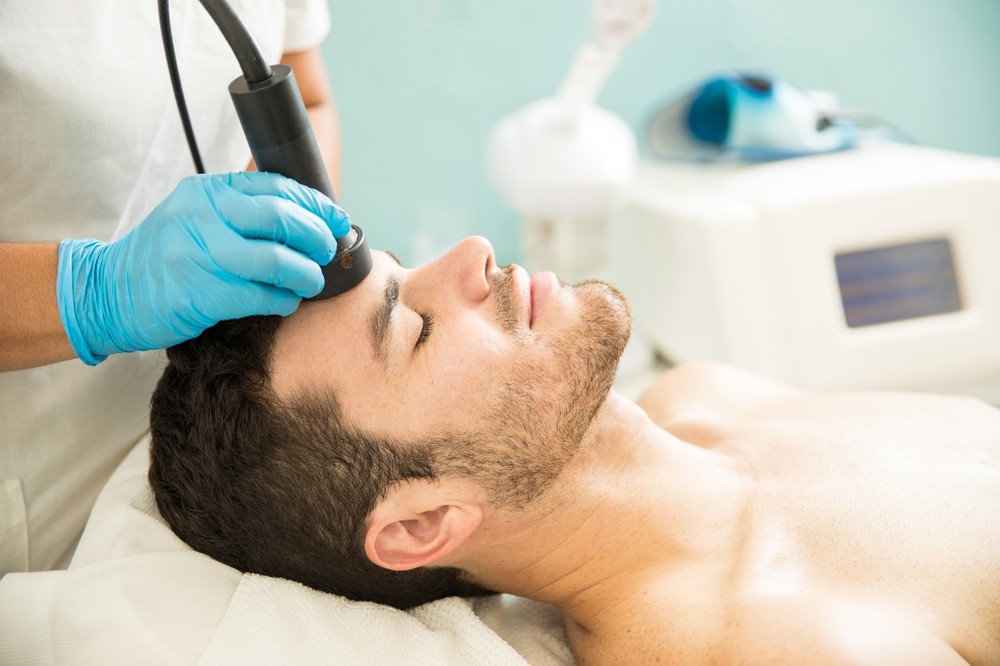
Esthetics narrows the focus to skin. California defines skin care as facials, massaging, exfoliating, and cleansing using the hands or esthetic devices. It specifically excludes anything that ablates or destroys live tissue, so medical-level procedures stay outside an esthetician’s license.
The esthetician program requires 600 hours. Of those, 350 go to skin care, 100 to health and safety, 100 to disinfection and sanitation, and 50 to hair removal and lash and brow beautification. Students spend most of their time on skin analysis, facial technique, and product knowledge. The curriculum stays focused on one area, so students spend most of their hours on skin work.
Training Compared
The numbers show how different the two programs are:
- Total hours: 1,000 for cosmetology and 600 for esthetics.
- Skin care hours: 150 for cosmetology and 350 for esthetics.
- Hair training: 400 hours of chemical and styling work for cosmetology, with none in the esthetics curriculum.
- Nail training: 100 hours of manicure and pedicure for cosmetology, with none in esthetics.
Estheticians study skin more than twice as long as cosmetologists do, while cosmetologists get a wider range of services.
A Typical Day on the Job
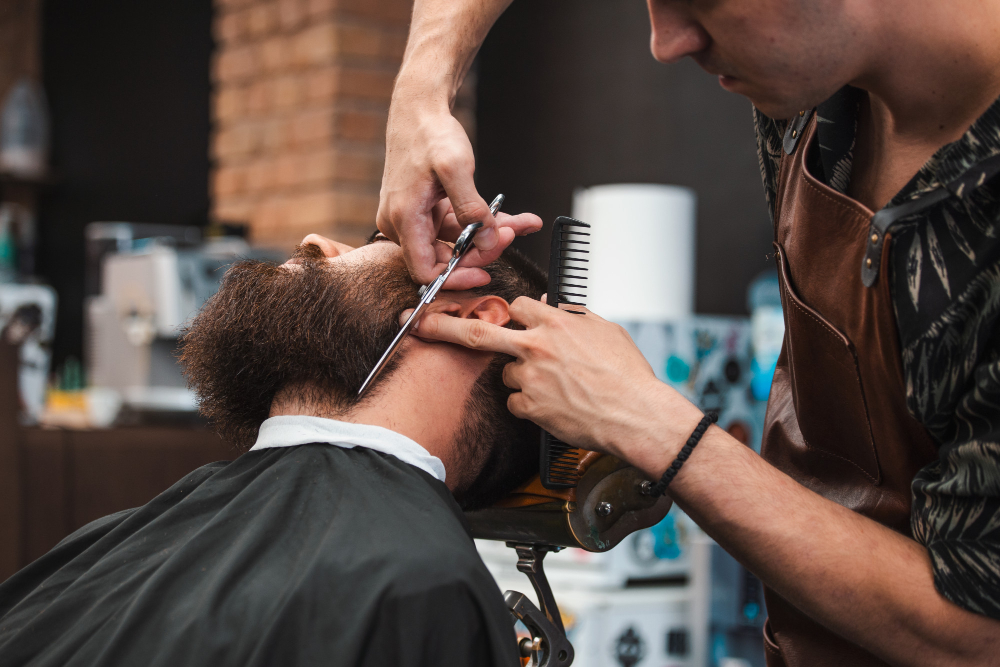
A cosmetologist’s day usually starts with consultations. A client might want a new color, a cut, or a full restyle, so the cosmetologist mixes color formulas, checks hair condition, and works through each service step by step. Appointments run back to back, and speed and creativity both count.
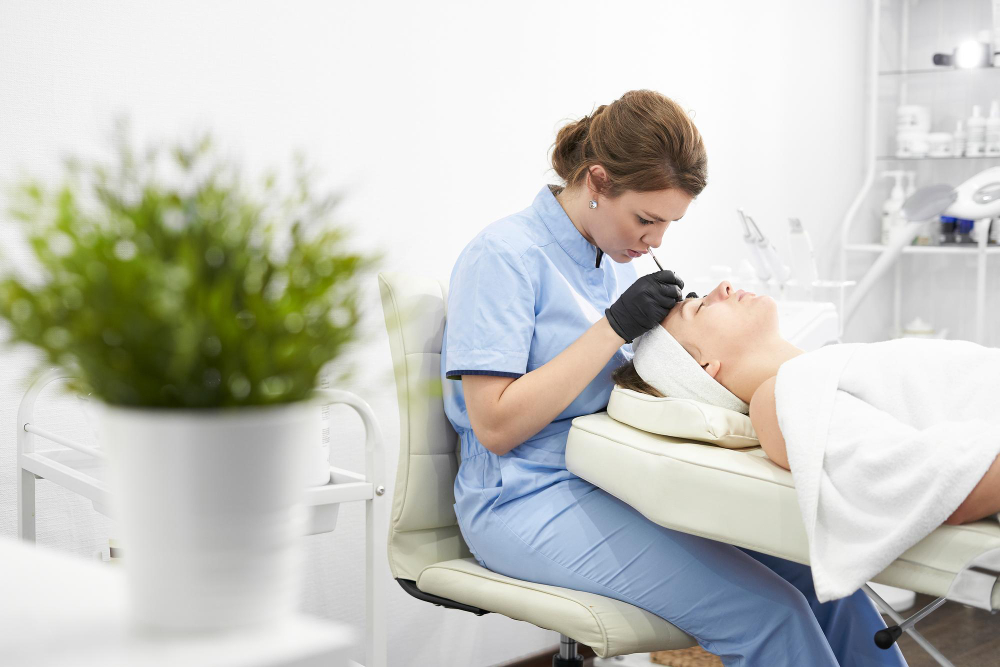
An esthetician’s day looks calmer and more clinical. Each client begins with a skin analysis, and the esthetician chooses a facial, an exfoliation, or a hair removal service based on what the skin needs. Estheticians also recommend home care products and book follow-up visits to track progress.
Career Paths
Cosmetologists often work in salons as stylists, colorists, or booth renters. Their skill set covers many services, so they can build a client list around hair, add nails or skin care, and move between settings as their interests change.
Estheticians typically work in spas, skin care studios, and wax or lash studios. Many specialize in facials, body treatments, or hair removal and build loyal clients through results they can see over time. Others move into product education or sales for skin care brands.
Skills You Will Use
Both careers reward people skills, but they lean on different strengths. Cosmetologists use color theory, steady hands, and an eye for shape and proportion. Estheticians use a good grasp of skin science, patience, and the ability to explain a treatment plan clearly to a client who may be nervous about their skin. Think about which set of skills you enjoy building, since you will practice them for years.
Licensing and Exams
Both paths follow the same steps. You complete your hours at a Board-approved school, apply to the California Board of Barbering and Cosmetology, and pass a written exam. California dropped the practical exam in 2022, so you will not need a hands-on test for either license.
Which One Is Right for You?
Think about the work that excites you most. If you love changing a client’s look with color, cuts, and styling, cosmetology is the natural fit. If you would rather spend your day on skin analysis, facials, and treatment plans, esthetics suits you better.
Time and budget count too. Esthetics takes 400 fewer hours, so you can start earning sooner. Cosmetology takes longer but opens more services under one license. Some students begin with esthetics and add cosmetology later, and others do the reverse once they know where their strengths are. A few questions can help you decide:
- Do I want to work mostly with hair or mostly with skin?
- Do I want to start earning sooner?
- Do I prefer variety or deep specialization?
If your answers point in different directions, talk with a school advisor about how each program fits your goals before you commit.
Choose Your Path at Southern California College of Barber & Beauty
At Southern California College of Barber & Beauty in Escondido, we teach both programs. Our cosmetology program runs 1,000 hours, with full-time and part-time day or night schedules. Our esthetician program runs 600 hours on part-time day or night schedules. Students practice on real clients in our student salon under instructors with decades of combined industry experience, and every program includes a student kit and a mock state board exam.
Financial aid is available to students who qualify, and we welcome veterans and military families through several benefit programs. Both programs build toward the state exam from the first week of class. Call us at 442.277.5847 or stop by on a visitor day to see which program fits you best.
FAQs
Yes. California requires 600 hours for esthetics and 1,000 hours for cosmetology, so esthetics takes 400 fewer hours to complete.
Cosmetology law covers facial services and skin care, but the training is lighter, with 150 skin care hours compared with 350 in esthetics. Estheticians go deeper into skin technique.
No. Since 2022, California requires only a written exam for both licenses.