Quick Summary
A California barber crossover course is 200 hours covering only the barber practices cosmetology school leaves out. Shaving is the heart of it: lather, hot towels and straight-razor work, alongside clipper cutting and fades, beard design, men’s facial treatments and the business of working a chair. Judge a course on how much of it is spent on real clients.
You already hold a California cosmetology license, so the question is not whether you can cut hair. What you want to know before enrolling is what a barber crossover course actually puts in front of you for 200 hours, and how much of it will be new.
Here is the curriculum, subject by subject, framed around what changes for someone already licensed.
Why the Course is Only 200 Hours
California does not ask a licensed cosmetologist to repeat barber school. The crossover curriculum is built to cover the barber practices that are not part of cosmetology training and nothing else, which is why it runs to 200 hours rather than the 1,000 hours a barber program requires from scratch.
That shapes everything below. Your sanitation theory, anatomy, chemistry and haircutting geometry already count, so the course spends its hours where cosmetology training does not go. The hours required for a barber crossover program and the scheduling around them are set out separately.
Shaving, Lather and Straight-Razor Work
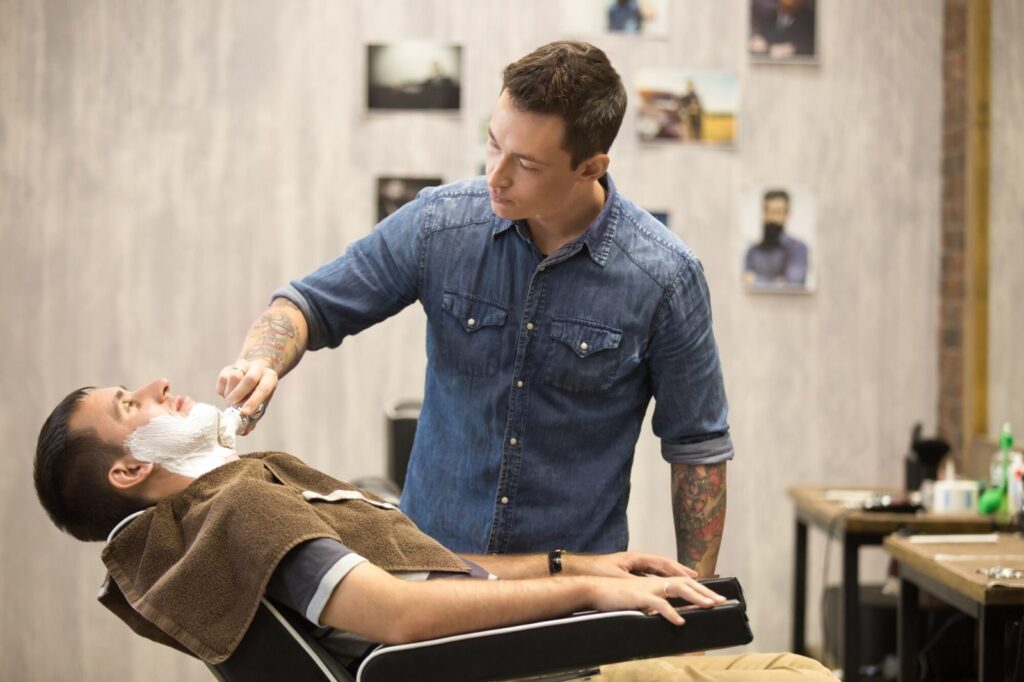
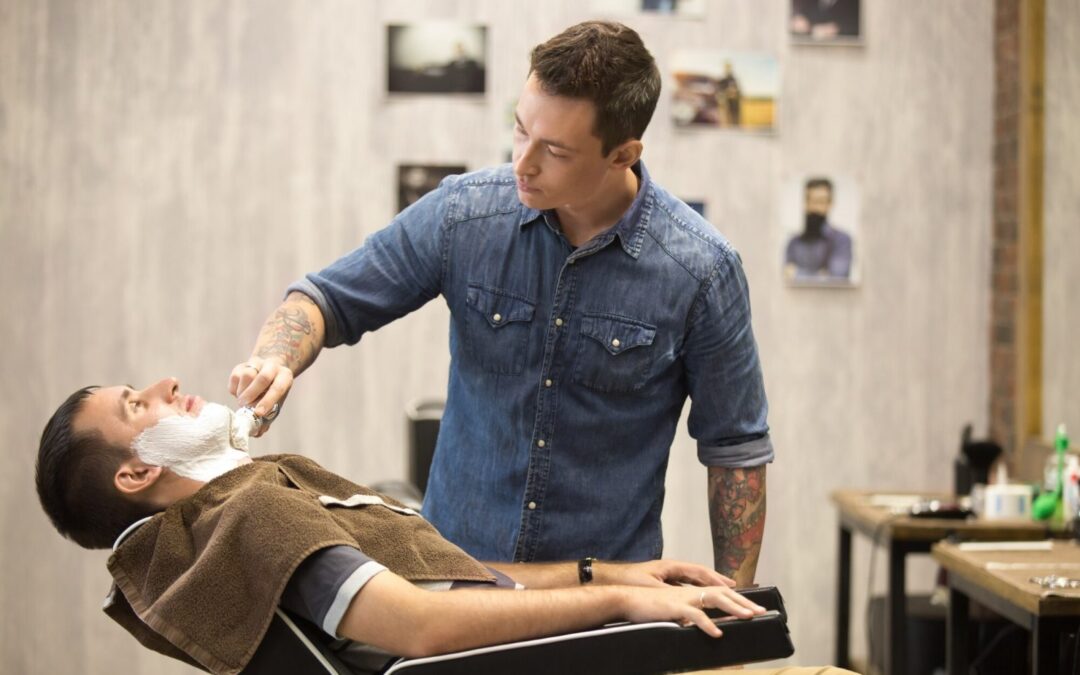
Shaving is where most of the 200 hours go, and for most cosmetologists it is entirely new ground.
You learn skin preparation before anything sharp comes near a face: lather, how to build it and why, and hot towels to soften the hair and relax the skin. Then the razor itself, which is a slower education than people expect. Grip and angle, the standard strokes and the direction of each one, working with the grain before anything else, and the care the jaw, neck and throat demand.
Just as much of it is knowing when to stop. Recognizing the skin conditions, irritations and broken skin that mean no razor today is examinable material and, later, the judgment that protects your license.
Clipper Cutting, Fades and Tapers
You can cut hair. Cutting it with clippers to a barber’s standard is a different motor skill, built through repetition.
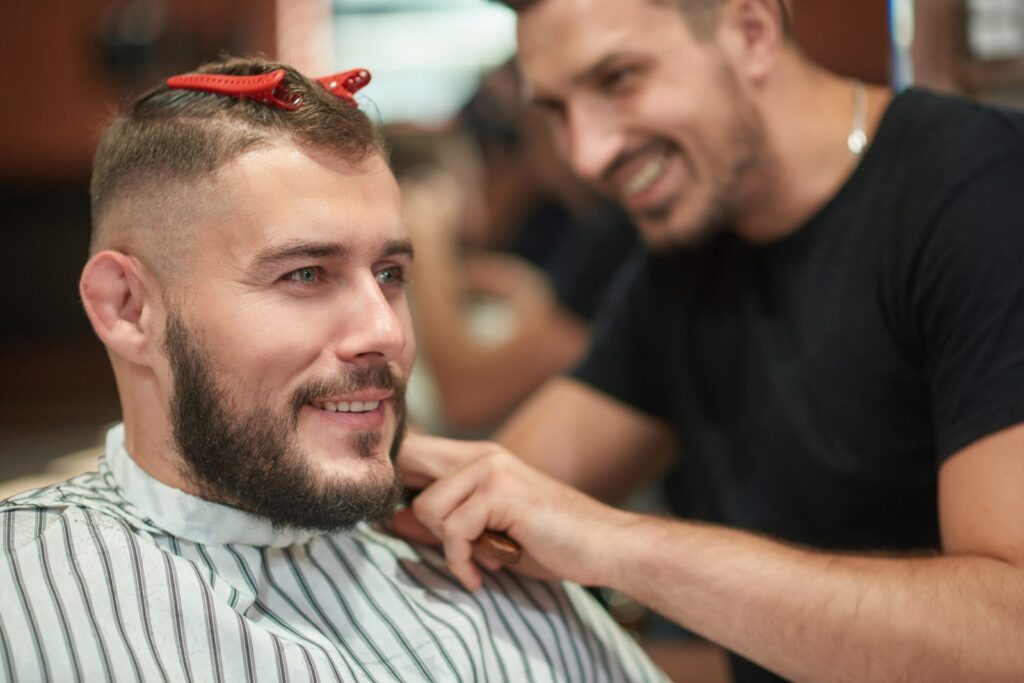
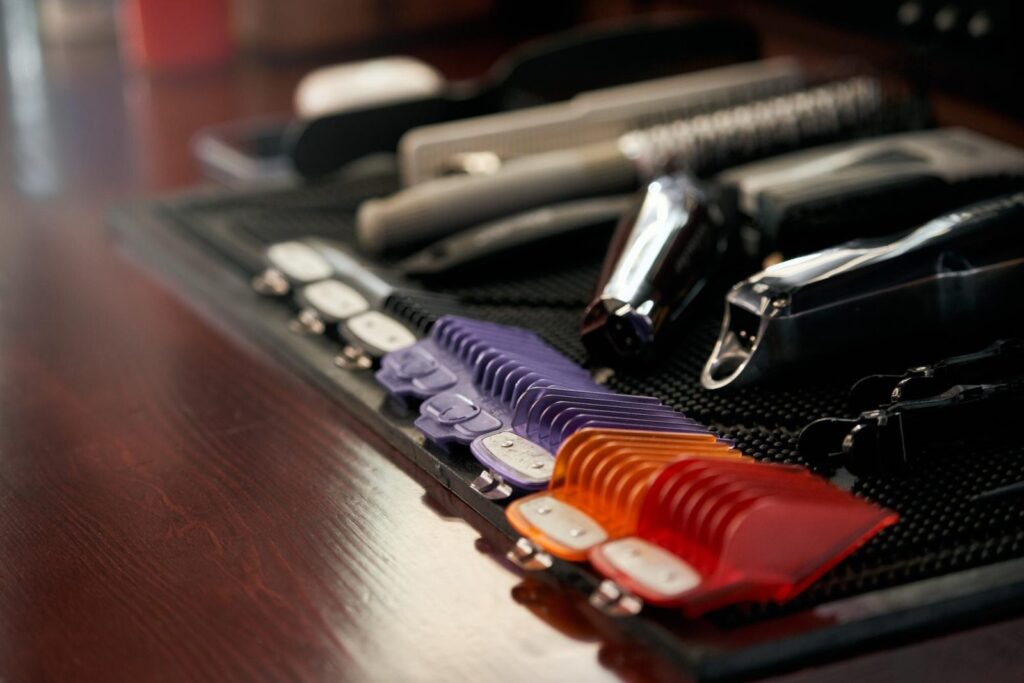
The course covers clipper and trimmer control, guard selection and what each number leaves behind, blade alignment and maintenance, and clipper-over-comb for the transitions a guard cannot blend. Then fades and tapers across a range of hair textures, which is where most students spend their practice hours, and the lineups and edge work that finish them.
Beard Design, Men’s Facials and Sanitation
Facial hair is its own discipline. You learn to shape a beard to the face in front of you rather than to a template, with trimming, outlining and symmetry, and the consultation that goes with it, which is a different conversation from a hair consultation.
Men’s facial treatments round out the service list, including the rest facials traditionally offered in a barbershop and recognizing the skin conditions that rule one out. Sanitation gets revisited too, not because it is new but because it applies differently: razors, blades and single-use items carry rules your shears never did, and station setup is inspected against the standard the Board sets.
The Business of Working a Barber Chair
A barber license pays off through a book, not a certificate. The course covers building a repeat clientele on a short appointment cycle, pricing and booking rhythm, managing a day of back-to-back cuts, and the difference between renting a chair and taking a job, which is the choice most crossover graduates face first.
Two habits get taught alongside it. The first is rebooking at the chair rather than hoping a client remembers, because a fade grows out on a predictable clock and a barber’s week is built on that. The second is tracking what each service actually earns you per hour once product and chair costs come out, which is the number that decides whether your pricing works.
Practicing on Real Clients in Escondido
Hours on a mannequin and hours on a person are not the same hours. Our crossover students work on real clients in our licensed school-operated barbershop under instructor supervision, which is where the razor work becomes reliable. Charlotte, a salon guest, described how that supervision looks from the chair in a 5-star review: “The instructor supervised the student well (without hovering right next to her) so I felt my hair was in good hands”.
Our instructors bring a combined 40 years and more of barber and beauty industry experience, and exam preparation runs alongside the practical work, so the crossover barber exam is not something you meet cold at the end. Day, part-time and night schedules fit around a working column, and financial aid is available to those who qualify. As one student, Dominick, put it in a 5-star review: “You will get exactly what you put into it”. If you do not hold a cosmetology license yet, our barber school in Escondido is the 1,000-hour route instead.
Frequently Asked Questions
How long is a barber crossover course in California?
200 hours, which is the length of ours. What varies between schools is how those hours are divided, so ask how many of them go on shaving before you compare prices.
What is the difference between a barber crossover course and barber school?
Barber school teaches the whole syllabus to someone starting from nothing, while a crossover course teaches only what cosmetology training leaves out. The practical effect is that nobody will walk you through sectioning or sanitation theory again, so expect to be handed a razor far sooner than a first-year student would be.
Do I need to be a licensed cosmetologist to take a barber crossover course?
Yes, or you need to have completed a Board-approved cosmetology course. Enrolment needs documentary proof rather than a declaration, so bring your license, a photo ID and your Social Security card to the first class instead of promising to send them on.
Can I take a barber crossover course online?
No, and shaving is the reason. A razor on a real face cannot be assessed remotely, which is why the practical hours are worked in the school barbershop, and why any course advertised as online is worth checking for Board approval before you pay for it.
Ready to Start?
Come and watch a crossover class at Southern California College of Barber & Beauty, or schedule a tour and see the barbershop floor where those 200 hours are spent.
Southern California College of Barber & Beauty prepares students to sit for the California state board examination. Licensing requirements are set by the California Board of Barbering and Cosmetology.