
Starting a career in beauty and wellness often comes with many questions, especially for those considering multiple areas of expertise. One question that frequently arises is, “can you be an esthetician with a cosmetology license?” While both professions share similarities, they are distinct in their focus and training requirements.
A cosmetology license opens doors to a variety of beauty services, including hair, nails, and makeup, but can it also serve as a stepping stone to becoming an esthetician? The answer lies in understanding both professions’ educational paths, responsibilities, and how they overlap.
Let’s explore how your journey from cosmetology to esthetics can be a valuable move and the steps you will need to take to broaden your skill set.
Quick Answer
In California, yes. A California cosmetology license already includes skin care, so licensed cosmetologists can perform esthetic services like facials, superficial exfoliation, and hair removal without a separate esthetician license. If you only want to work with skin, a 600-hour esthetician program is the faster, more focused path. Rules differ by state, so check with your state board if you plan to work outside California.
Understanding Cosmetology vs. Esthetics
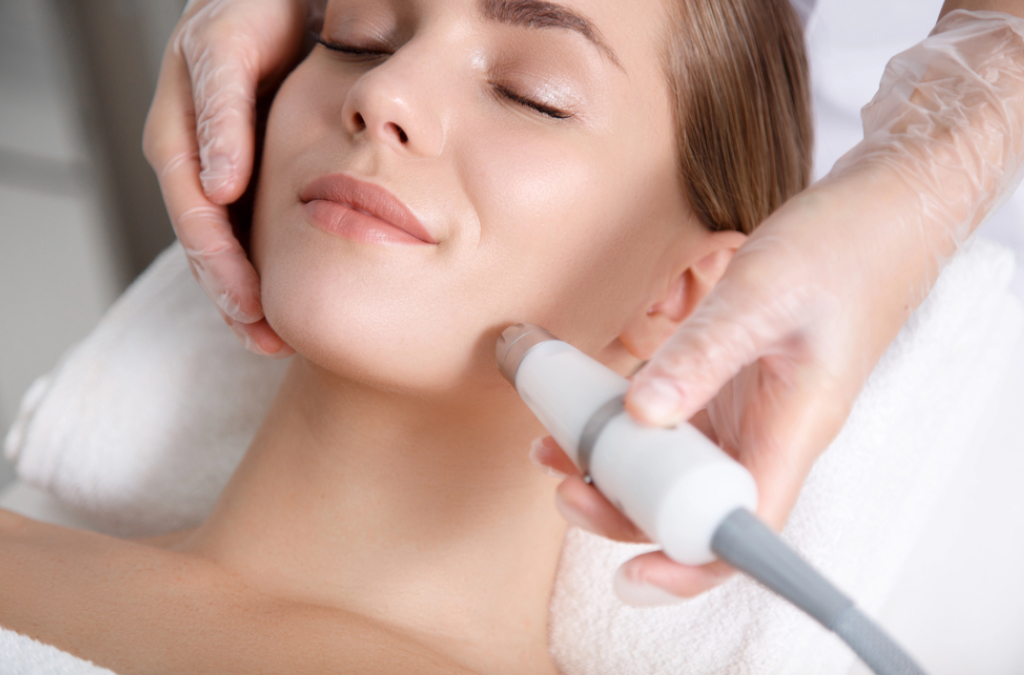
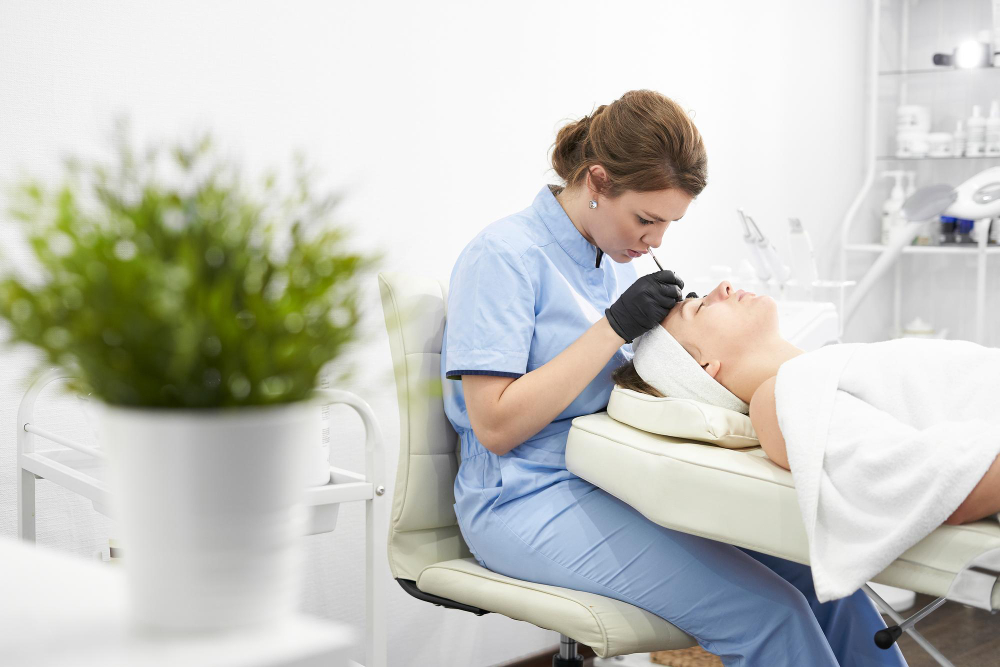
Cosmetology and esthetics are often confused because they both deal with beauty services. However, they specialize in different aspects of personal care. Cosmetology is a broader field that encompasses hair styling, makeup, nail care, and sometimes skin treatments. Estheticians, on the other hand, focus primarily on skincare, performing services such as facials, body treatments, and hair removal. The key difference is that cosmetologists work with the entire body, while estheticians specialize in skincare.
For example, a cosmetologist might give a haircut and also offer a facial as part of their service, while an esthetician would focus solely on the skin, treating acne, aging, and other skincare concerns. Though there is some overlap, the skill sets and training differ significantly.
Licensing Requirements for Cosmetologists and Estheticians
In the United States, cosmetologists and estheticians must undergo specific education and training to become licensed professionals. These requirements vary by state but generally follow a similar framework.
A cosmetology license requires comprehensive training in multiple beauty disciplines. In California, cosmetology programs require 1,000 hours (down from 1,600 hours before Senate Bill 803), where students learn a broad range of topics, including hair care, nail services, skin treatments, and makeup application. This allows cosmetologists to offer a full suite of services in a salon or spa setting.
In comparison, an esthetician license focuses more narrowly on skin care and treatment. In California, it requires 600 hours of study and covers subjects such as microbiology, infection control, chemical handling, and skin anatomy. While both fields require an understanding of anatomy and physiology, estheticians dive deeper into the specifics of skin health and beauty.
So, can you practice as an esthetician with just a cosmetology license? It depends on where you live. In some states, cosmetologists can perform basic esthetic services such as facials and hair removal, but in other states, they may need additional training or certification to offer more advanced skin treatments.
In California, both the cosmetology and esthetician scopes of practice cover skin care limited to the outermost, non-living layer of the skin, including facials, superficial exfoliation, and hair removal. Since Senate Bill 803, estheticians can also perform lash and brow tinting, lash perming, and dermaplaning. Deeper treatments, such as medical-grade peels and laser procedures, fall outside both licenses.
Can You Be an Esthetician with a Cosmetology License?
The short answer is: it is possible, but it depends on your state’s regulations. Many states have laws that allow cosmetologists to perform some esthetic services, but the scope of those services is often limited compared to the broader role of a licensed esthetician.
If you are a cosmetologist interested in offering more skincare services, you may need to undergo a short additional training program to meet the specific requirements of becoming a licensed esthetician. This could involve completing additional hours of education focused on skin care treatments. Some states will allow you to “upgrade” your cosmetology license by attending a specialized esthetician course, while others may require a completely separate application process for esthetics.
For those asking, can you be an esthetician with a cosmetology license—the pathway is often straightforward, but you will need to ensure you meet all the specific criteria for your state.
The Benefits of Dual Licensing
Having both a cosmetology and esthetician license can open up new career opportunities and increase your income potential. With dual licensing, you can offer a wide range of services, attracting a broader client base. Many clients prefer one-stop shops, and offering both hair and skin care services can make your business more appealing.
- Diverse Skill Set: Holding both licenses allows you to provide a more comprehensive suite of services, increasing your versatility as a beauty professional. This can give you a competitive edge in the marketplace.
- Greater Earning Potential: With dual certification, you can often charge higher rates because you are qualified to offer specialized services that others may not provide. Whether you are a salon owner or an independent contractor, expanding your skill set will allow you to attract more clients.
- Flexibility in Career Paths: Dual licensing opens up various career options. You may choose to work in upscale spas or salons where clients expect both hair and skin services, or you could even start your own beauty business. The possibilities are vast for those with a broad range of skills.
Expanding Your Career with the Right Training
Transitioning from a cosmetology license to an esthetician certification is not only feasible but can also be a strategic career move. With a focus on both hair and skin care, you position yourself to meet the growing demand for beauty professionals with diverse skills.
If you are interested in expanding your career into skincare, consider an esthetician program focused entirely on skin. These programs will teach you the specialized techniques needed for esthetician work, such as skin analysis, facial treatments, and advanced hair removal methods. You will also gain knowledge in business practices, ensuring you are ready to thrive in the beauty industry.
How Southern California College of Barber & Beauty Can Help
At Southern California College of Barber & Beauty, we offer specialized programs that equip you with the skills needed to excel in both cosmetology and esthetics. Our curriculum is designed to help you gain both the technical expertise and business acumen required for a successful career in the beauty industry. With flexible schedules, financial aid, and hands-on training, we provide a supportive environment where you can take the next step in your professional journey.
FAQs
Yes. Skin care, including facials, is part of the California cosmetology scope of practice, so a licensed cosmetologist does not need a separate esthetician license to perform facials.
California requires 1,000 hours of training for a cosmetology license. Before Senate Bill 803, the requirement was 1,600 hours.
California requires 600 hours of training for an esthetician license.
Choose cosmetology if you want to offer hair, nails, makeup, and skin services. Choose esthetics if you want to focus only on skin, since the program is shorter at 600 hours.
Southern California College of Barber & Beauty offers cosmetology and esthetician programs at 641 N. Broadway in Escondido, with day and evening schedules and financial aid for students who qualify.
I want to learn how to do nails and makeup in eyelashes and I want to learn how to do a massage as well I want to be opening my own beauty salon
Please give us a call or email! 🙂